
Powder Brows vs Microblading: Which Brow Technique Is Right for You?
Good brows change how your whole face reads. Building them with brow powder or pencil every morning takes time you don’t have, and the makeup look rarely comes out the same twice. That’s why so many people with thin or sparse brows start looking into permanent makeup. Of the semi-permanent brow techniques available now, two come up most often. Here’s how powder brows vs microblading actually compare, so you walk into your consultation already knowing what you want.
What Are Powder Brows and Ombre Brows?
Powder brows go by a few names: ombre brows, ombre powder brows, shaded brows. All the same semi-permanent makeup technique.
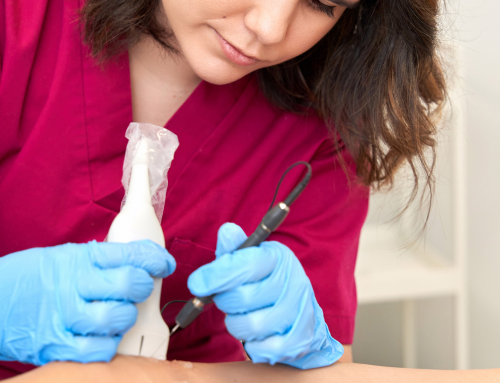
Powder brows use a machine to deposit pigment into the skin. It goes in as thousands of tiny dots, layered to create a soft finish rather than drawn as lines, and the color stays in the upper layer of your skin. Powder brows create something close to soft makeup applied with a light hand. It fades evenly as it wears. Most clients come back for a refresher at about a year.
Call it ombre brows when the shade starts light at the front and deepens toward the tail. Same powder brow technique, with a gradient built in on purpose.
What Is Microblading for Eyebrows?
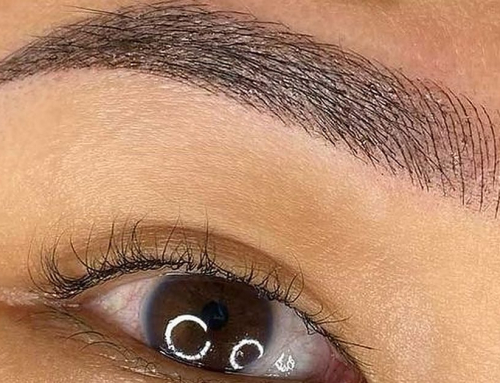
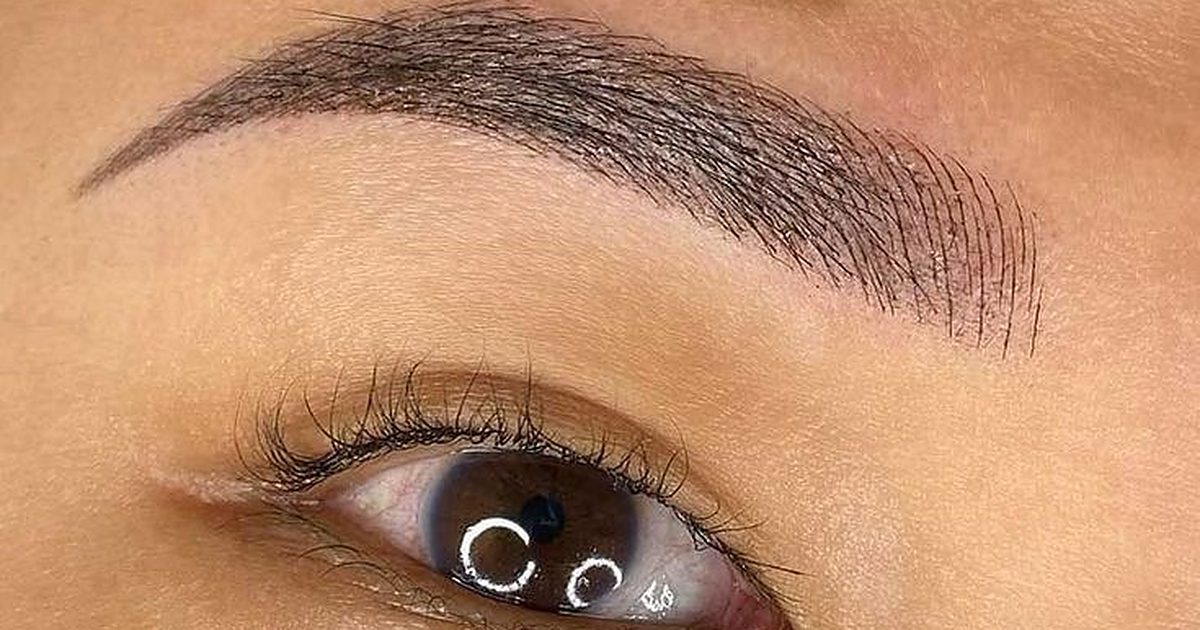
Microblading is a semi-permanent makeup technique that builds a brow one stroke at a time. The tool is manual: microblading uses a hand tool fitted with fine needles to create small channels in the skin, and pigment is worked into each one. Where powder brows shade, microblading creates individual hair-like strokes, so the healed brow reads as separate hairs instead of fill. Traditional microblading uses a handheld blade rather than a machine, which is what sets it apart from the newer stroke techniques.
Those natural looking hair strokes need something to blend into. Microblading looks its best on a brow with existing brow hair, where new strokes sit alongside your own natural brow hairs and pick up the look of natural texture. On skin that doesn’t heal cleanly, it’s the less forgiving of the two.
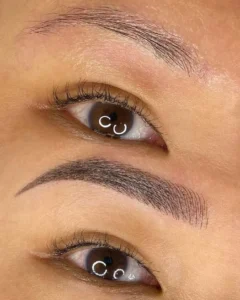
Powder Brows vs Microblading: Key Differences
Both treatments place pigment in the skin to make brows look fuller. The difference between microblading and powder brows is the tool and what you’re left with once healing finishes. One shades the whole brow. The other draws it in, stroke by stroke.
Appearance
Powder brows heal into an even wash of color. From a few feet away the shape looks defined; up close it stays soft. Microblading results read as texture instead of fill, because every stroke is placed to mimic natural brow hair. Those strokes borrow from the hairs you already have, which is why microblading suits a brow that needs shaping more than one that needs rebuilding.
The Procedure
Budget about two hours for either appointment. That covers mapping, shade selection and topical numbing. Your consultation beforehand runs roughly thirty minutes.
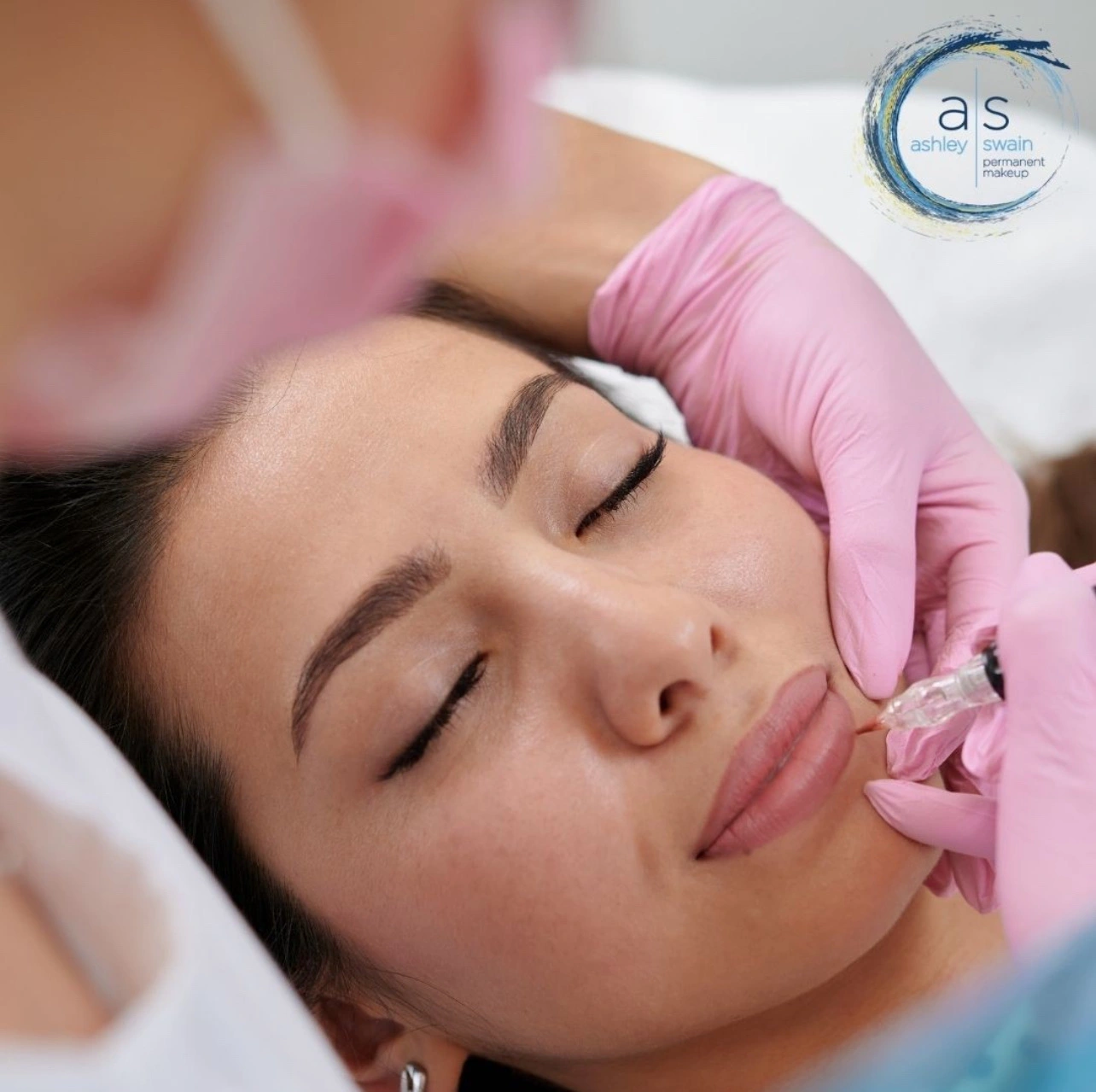
Powder brows are worked with a machine and a fine needle, which most clients describe as a light vibration. Microblading uses a blade, and you’ll feel that more.
Healing Process and Skin Type
Healing is where the differences between powder brows and microblading get real. Powder brows flake lightly for about a week, then settle. Microblading scabs along every stroke and takes two to three weeks, and microblading often looks darker and sharper before it softens into the result you booked.
Your skin type usually decides this for you. Microblading tends to blur on oily or thicker skin as the strokes heal. Powder brows generally sit better on oily skin. They keep their shape and give better retention there. Want the hair stroke look anyway? Nano brows place those strokes with a machine instead of a blade, and our guide to nano brows vs microblading walks through that option.
Longevity: Which Brow Treatment Will Last Longer?
Microblading and ombre brows run about the same timeline. A refresher at roughly a year keeps the color and the brow shape looking fresh. Powder brows can last longer between appointments in practice, because shaded work fades across the whole brow at once, while fine strokes lose their crispness one stroke at a time and show it sooner. Ombre brows can last the same stretch, because the gradient is the only thing that changes.
Four things move that timeline.
- Aftercare. Don’t scratch or pick at flaking skin, and stay out of the sun for at least two weeks. The instructions you get at your appointment override anything you read online, including this.
- Sun exposure. UV fades pigment and ages the skin around it. Wear sunscreen and a hat.
- Skin type. Dry, oily, thick and thin skin all hold pigment differently. Using products suited to yours helps.
- Over exfoliation. Scrubbing the brow area, or putting acids and exfoliants on it regularly, fades pigment faster.
Your first touch up gets booked two to six weeks after the initial session, depending on the area treated.
Choosing the Right Brow Technique
Two things decide it: the look you’re after, and how much healing time you’re willing to give it. No single technique is suitable for all skin types, so microblading or powder brows is a question for your consultation rather than something you pick off a menu.
At Ashley Swain, we point most clients toward powder brows. Why:
- Soft, natural looking brows.
- Easier to land the exact brow shape you asked for.
- Faster healing.
- Less flaking and scabbing.
- Less discomfort during the appointment.
- Pigment that’s simple to layer and adjust to your shade.
Combination Brows
Hybrid brows combine the two. Combination brows, also called combo brows, put hair strokes at the front of the brow and shading through the body and tail. That’s often the right answer for a brow with hair in some spots and nothing in others, and plenty of clients start there.
Whoever you book with, look at their healed work and their training first. You can meet our team before you commit to anything.
Frequently Asked Questions
Is microblading better than powder brows? Neither wins outright. The microblading vs powder brows answer depends on your skin and how much brow hair you still have. Powder brows often suit sparse or oily skin; microblading suits a brow with hair to blend into.
Do powder brows look like makeup? They look like brow makeup applied with a light hand, not a drawn-on brow. At speaking distance, people read them as a neatly filled brow.
What if I have very little natural brow hair? Powder brows don’t depend on existing hair to look right, so they’re usually the stronger choice. Microblading does need hair to blend into.
Does either one hurt? Pain tolerance varies, and you’re numbed topically before any pigment goes in. Powder brows feel like a light vibration to most clients. Microblading feels sharper, closer to scratching.
Can I have powder brows over old permanent makeup? Often yes. Sometimes the old pigment needs lightening first. We do correction and removal, including work done at another studio, and we’ll assess yours at the consultation.
Key Takeaways
Semi-permanent brows give you back the minutes you spend filling your brows in every morning, and they hold a shape your own hand can’t repeat daily.
Both techniques give you brows you never have to draw on. For an even finish and faster, easier healing, we recommend powder brows for most clients. If your skin and your brow hair suit microblading more, we’ll say so at the consultation instead.
Still weighing powder brows vs microblading? Book a complimentary consultation with Ashley Swain in Palm Beach Gardens on 561.295.8481, or request a time through our contact page. We’ll look at your skin and your natural brow shape, then tell you which technique gets you the result you want.